

Powerful El Niño Forecasted to Cause Sugar Surplus to Turn into Deficit This Season
El Niño is impacting the largest sugar producers globally, revealing the crop’s significant susceptibility to this climatic phenomenon while also offering an early indication of broader risks to farmers and global food inflation.
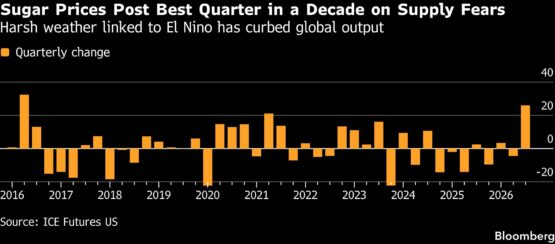
At the start of the year, the sugar market was in a surplus; however, El Niño is triggering a dramatic shift, with many analysts now predicting a shortage for the season beginning this week. Raw sugar futures have risen by over 25% since July.
El Niño poses a unique challenge for sugar: it enhances rainfall in Southern Hemisphere cultivation areas while intensifying drought conditions north of the equator.
The concentration of production in Brazil, India, and Thailand—all vulnerable to the climate phenomenon—positions sugar as a key indicator of broader crop damage, with El Niño expected to peak around the end of this year.
“Sugar is one of the most clearly El Niño-sensitive commodities,” states Leonardo Alencar, a food, beverage, and agribusiness analyst at XP Investimentos based in São Paulo.
“When El Niño simultaneously threatens sugarcane performance in Brazil’s Center-South and the exportable surplus in Asia, the market loses its primary supply buffers, typically resulting in a tighter global balance, lower inventories, and upward pressure on sugar prices.”
Read:
Food prices pose a new threat to global bonds following selloff
Will El Niño-induced drought affect food prices in South Africa?
Understanding the transition from El Niño to super El Niño
The sweetener has played a role in driving global food prices to their highest levels in over three years, creating additional inflationary pressures for consumers and policymakers who are considering more monetary tightening in light of the conflicts in the Middle East and Ukraine.
Extensive rainfall is hampering sugarcane harvesting and crushing in Brazil, the leading producer. Meanwhile, in India, farmers are expressing concerns over weak monsoon rains affecting their yields, and Europe is experiencing its worst sugar beet harvest in more than a decade due to a scorching summer.
When combined with drought conditions in Thailand, these factors threaten over half of the global sugar crop.
ADVERTISEMENT
CONTINUE READING BELOW
“El Niño is undoubtedly affecting us,” remarked Eder Vieito, CEO of Green Pool Commodity Specialists. “The declines in sugar production are significant across the board.”
Sugar is not the only crop affected by El Niño; rice is similarly vulnerable to insufficient rainfall across Southeast Asia. Cocoa production in West Africa is threatened by drier conditions, and coffee and palm oil are also at risk.
However, sugar stands out as an early indicator of El Niño’s effects.
The increasing threat from El Niño marks a significant shift from just over seven months ago when sugar prices fell to a five-year low. At that time, prior to the conflict in Iran and the emergence of this climatic phenomenon, investors anticipated that a large Brazilian crop would further exacerbate the global surplus.
The change in forecast is particularly notable in Brazil. Rainfall levels in several crucial growing areas have reached up to four times normal levels over the past month, as reported by Donald Keeney, senior agricultural meteorologist at Vaisala Xweather.
Read:
El Niño may drive millions into acute hunger, warns UN
Looming drought in Thailand threatens global supplies of sugar and rice
This has disrupted harvesting and limited mills’ abilities to process cane, further tightening supplies after the oil shock from the Iran war redirected more of the sugar into fuel production.
Due to the loss of several days of crushing, mills may struggle to extend the season sufficiently to catch up, with upcoming rains in December expected to reduce exports by about 2 million tons, according to José Pessoa from the José Pessoa Group, a family-run business involved in sugarcane planting and processing in Brazil’s Center-South and Northeast regions.
“When delays occur, mills typically attempt to extend crushing through December. However, this year, that will not be feasible,” Pessoa noted. “We simply won’t be able to prolong crushing, and that’s due to El Niño.”
ADVERTISEMENT:
CONTINUE READING BELOW
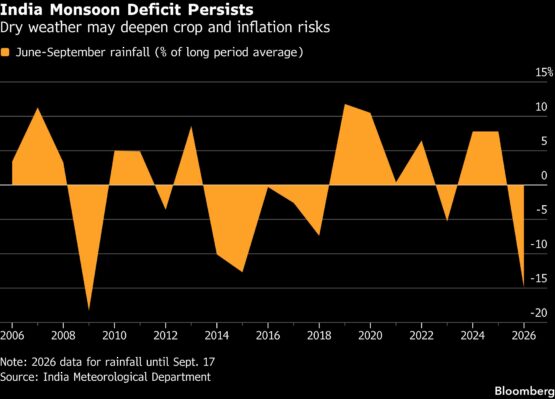
In India, the scenario is quite different, with rainfall being below average. The world’s second-largest sugar producer has just recorded its weakest monsoon season since 2015, resulting in a projected sugar output of approximately 30 million tons.
There are indications that the surplus stocks built up during the previous glut are beginning to diminish, leaving India with little margin for another below-par crop, said Vieito from Green Pool.
Thai producers are also facing difficulties. Rainfall in northeastern Thailand, the leading sugarcane-growing region, has been approximately two-thirds of the 30-year average, according to Vaisala.
This is likely to lead to a reduction in sugar output of at least 17%, dropping to less than 10 million tons in the upcoming season.
“Conditions on my sugarcane farm are dire, affected not only by drought but also by sugarcane diseases,” said Suntorn Nongkhunsarn, a farmer from Kalasin province.
Even in beet-producing areas of the Northern Hemisphere, El Niño is heightening the risks. Drought conditions in the U.S. have delayed beet harvesting in certain regions, leaving the crop vulnerable to adverse weather as El Niño strengthens toward the year’s end, according to Andraia Torsiello from Expana.
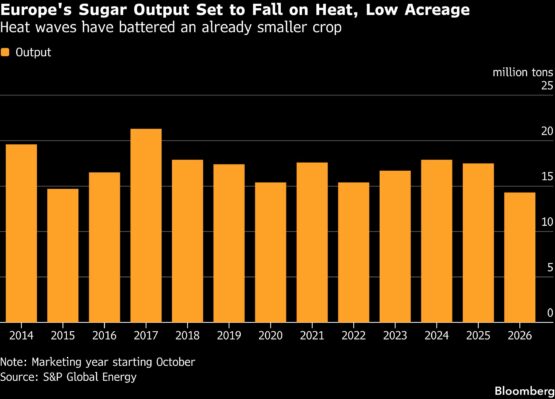
In Europe, El Niño likely exacerbated a series of heat waves that impacted sugar beet fields, leading to outputs at their lowest in over a decade and assisting in a rebound in prices from multi-year lows.
Output in France, the leading European producer, is set to be the worst since at least 1980, following the hottest summer on record for the region.
Globally, sugar prices have risen by 18% this year, outpacing any other item in the United Nations’ food commodity price index, aside from vegetable oils.
ADVERTISEMENT:
CONTINUE READING BELOW
The potential disruption from El Niño has garnered traders’ attention. Open interest in sugar futures reached all-time highs this year, and hedge funds have bolstered price increases by establishing their most optimistic positions in years.
Read:
South Africa’s sugar industry warns that record imports threaten jobs
Global food prices may soar due to Brazil’s unprecedented drought
“Significant sums are being wagered on the effects of El Niño,” commented Carlos Mera, head of agricultural commodities markets at Rabobank. He indicated that speculative positioning may have driven sugar prices higher than the fundamentals would justify.
Nevertheless, some analysts believe that prices could rise further as El Niño intensifies and supplies become even more constricted.
Read: GLP-1: A challenge for fast-food companies?
According to Citi research analysts led by Arkady Gevorkyan, prices may increase by about 20% over the next year due to adverse weather conditions and significantly tighter inventories than officially reported.
“Stocks have continued to decline, and it comes to a point where if an unexpected issue arises, the question becomes: where will the sugar come from?” stated Judy Ganes, president of J. Ganes Consulting. “This situation leaves the market vulnerable.”
© 2026 Bloomberg